BYD Service Network in the US — What Private Buyers Should Expect
BYD is visible in American commercial EV fleets. That is not the same as a Seal or Atto private-owner service map. Here is how to separate the two.
Who this guide is for
You keep seeing BYD headlines — global sales, Canada tariff news, buses in California — and you wonder whether that means a private Seal or Atto owner in your metro can book warranty work next week.
This guide is for US city commuters who need a service model they can call and verify, not a keynote slide. It is also for anyone being pitched a gray-market passenger BYD as “basically supported in the US.”
Service reality is appointment latency and parts lead time — not brand billboards. Photo: Unsplash (illustrative).
Start with the right mental model
US media and social feeds mix two different BYD stories:
- Commercial BYD — electric buses, trucks, and fleet customers with depot charging and contracted maintenance
- Passenger BYD — Seal, Dolphin, Atto-class cars that dominate conversation overseas
As of our last verification (30 Aug 2026), reputable reporting still describes passenger BYD retail in the United States as not a normal authorized channel. USA Today coverage of BYD’s Canada push explicitly notes that BYD’s US-facing executives have described the American consumer market as highly restrictive, with passenger cars not sold in the US under current tariff and connected-vehicle constraints. Electrek’s follow-on reporting similarly frames the US as the major market BYD is avoiding while exploring Canada.
A bus plant does not equal a bumper-to-bumper Seal appointment next Tuesday.
What “service network” means for a city commute
For commute cars, service is not a brochure map. It is four operational questions:
| Question | Why it matters |
|---|---|
| How many days until diagnostic? | Determines whether a weird noise becomes a two-week rideshare bill |
| Who stocks crash parts? | A fender-bender can idle a car for months if panels are exotic |
| Mobile vs bring-in? | Urban owners without garage access depend on mobile techs |
| Loaner / downtime help? | Softens downtime; rare for gray-market setups |
Tesla private owners (and Hyundai / Kia / Toyota EV owners) can stress-test those questions this week. Prospective Seal private owners in the US largely cannot, because authorized retail + service for those passenger models is not a normal nationwide product under current reporting.
Why the network is thin: policy stack, not vibes
Two federal layers matter for anyone hoping a “service network appears soon”
- Section 301 EV duties — USTR’s 2024 modifications raised additional duties on electric vehicles to 100% (effective for covered entries on/after 27 Sep 2024 per the Federal Register notice package). That alone destroys most “European sticker → US driveway” math for China-origin passenger EVs.
- Connected-vehicle ICTS rules — Commerce/BIS finalized restrictions on certain Vehicle Connectivity System (VCS) and Automated Driving System (ADS) hardware/software with a sufficient nexus to the PRC or Russia (Federal Register publication Jan 2025; BIS press materials summarize import/sale prohibitions and phased model-year timing). Even if tariffs moved, software/hardware compliance remains a separate gate.
FairRange’s takeaway for service planning: networks follow legal retail. Until certification + lawful sale paths are clear, private-owner service maps stay speculative.
Commercial footprint ≠ private ownership map
Industry coverage of “BYD in the USA” repeatedly emphasizes commercial vehicles and related manufacturing — while passenger retail remains constrained.
Practical implication:
- Fleet BYD buses may have contracted depot technicians and parts agreements
- A private owner of a non-US-certified passenger EV may have ad hoc independent shops
Those are different reliability profiles. Do not average them.
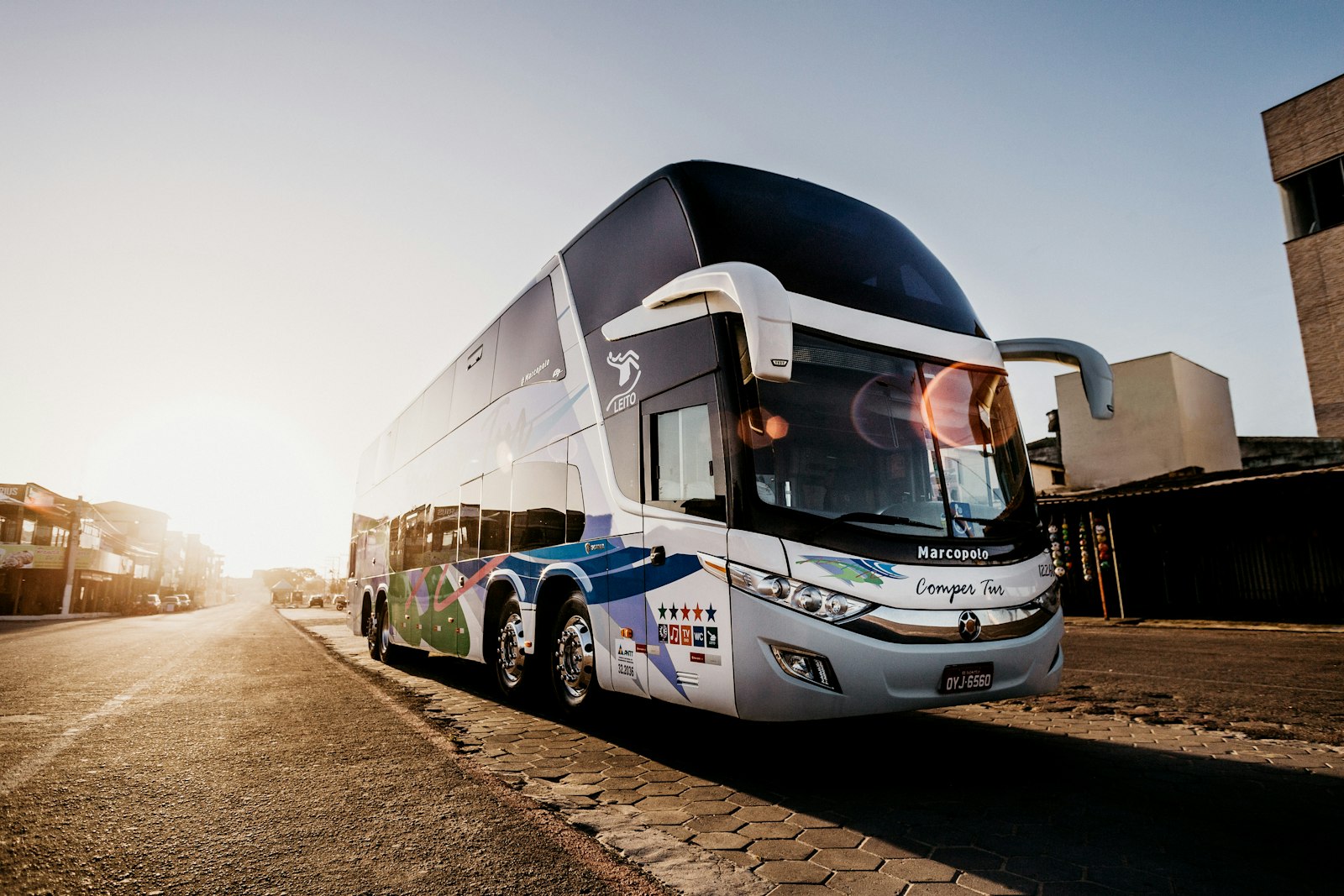
Commercial EV fleets (buses/trucks) are where BYD’s US visibility is strongest — a different customer and parts pipeline than private sedans. Photo: Unsplash (illustrative).
Specs / marketing claims that distract from service
Marketing and social clips often sell:
- “Global brand, so support must exist”
- Factory photos in California as proof of passenger readiness
- Canada dealer headlines as if they apply to US title/insurance
What a commute owner should measure instead:
- Written warranty entity (LLC name)
- Sample parts ETA for crash + wear items
- Insurer willingness on a personal auto policy
- Body-shop willingness within 25–30 miles
NHTSA’s importing-vehicle guidance exists because cars built for other markets may lack US FMVSS conformity. If the car is not a normal US-certified product, treat service promises as specialty until proven otherwise.
How to diligence any Chinese-brand EV service claim
Use this script whether the pitch is “BYD is coming,” “we have a partner shop,” or “Tesla-like coverage soon.”
1. Ask for the legal entity that performs warranty work
Not a marketing brand name — the LLC that will open a repair order.
2. Ask for a sample parts ETA on two SKUs
Example: front bumper cover + 12V support module. Vague “we can get anything” answers fail.
3. Ask your insurer first
Call with the VIN (or exact model year/market) and ask:
- is the vehicle insurable on a standard personal auto policy?
- are there preferred shops?
- any surcharge for non-US-certified / gray import?
If insurance hesitates, the service network debate is already secondary.
4. Compare against a control car
Pick a US-certified EV you might actually buy. Run the same appointment-latency call. Keep the spreadsheet. FairRange’s bias: observable networks beat promised networks.
What to expect if passenger BYD retail eventually launches
A credible private-owner launch usually shows, in order:
- US certification announcements with test protocols named
- Named dealer/service partners with addresses (not “coming to 20 cities”)
- Parts warehouse region disclosed
- Warranty document that names who pays for what
Until those appear in primary reporting, treat “service network” claims as forward-looking marketing, not commute insurance. Canada’s 2026 tariff experiments (covered by USA Today / Electrek) are useful geopolitics — they are not a US service map.
Resale and downtime risk (service is an exit cost)
Poor service access raises:
- days without a car (cash cost)
- body-shop refusal (liquidity risk when selling)
- buyer fear on the used market (“who will fix this?”
For a 3–5 year commute hold, those frictions can outweigh brochure efficiency gains.
Verdict
| Scenario | Expectation |
|---|---|
| You own / buy US-certified mainstream EVs | Stress-test real appointment latency; don’t assume perfection |
| You are waiting on BYD passenger retail | Watch certification + named service partners; ignore vibes |
| You are offered a private BYD passenger EV now | Assume specialty/independent service unless contracts prove otherwise |
Bottom line for US city buyers: BYD’s American commercial presence is real and worth covering. It is not currently a substitute for a private Seal/Dolphin service map. Plan ownership around what you can book this month — not what a keynote slide promises next year.
Sources
- BYD global site: https://www.byd.com/
- USA Today — BYD / Canada and US market restrictiveness: https://www.usatoday.com/story/cars/news/2026/01/20/byd-trade-deal-canada/88217293007/
- Electrek — BYD Canada interest; US described as complicated: https://electrek.co/2026/03/13/byd-open-to-building-cars-canada-acquiring-rival-automaker/
- USTR — Section 301 modifications (EV duties to 100%): https://ustr.gov/sites/default/files/Section%20301%20Modifications%20Determination%20FRN%20%28Sept%2012%202024%29%20%28FINAL%29.pdf
- BIS — Connected vehicles final rule press release: https://www.bis.gov/press-release/commerce-finalizes-rule-secure-connected-vehicle-supply-chains-foreign-adversary-threats
- NHTSA — Importing a motor vehicle: https://www.nhtsa.gov/importing-vehicle
Not legal, insurance, or financial advice. Service and trade rules change; re-verify before purchase. Last verified 30 Aug 2026.
FAQ
Does BYD have US factories?
BYD has had US commercial manufacturing presence (notably heavy-duty / bus-related activity in California covered in industry reporting). That supports fleet products — it is not proof of a nationwide private passenger service network for Seal owners.
If I buy a gray-market BYD passenger EV, who services it?
Often: independent shops willing to touch it, importer relationships, or specialty EV independents — not a Tesla-like brand app flow. Get the legal entity, parts ETA, and insurer confirmation in writing before you buy.
What should I measure instead of “dealer count”
Parts lead time for a crash repair, mobile tech coverage radius, loaner policy, and whether your insurer has a preferred body shop that will touch the car.
Editorial opinion for research only. Not financial, legal, or purchase advice. Last verified 2026-08-30.