Chinese Compact EV vs Toyota bZ4X: Reliability Anxiety, Explained
“Chinese cheap vs Toyota reliable” is a feeling, not a US spreadsheet. Use the purchasable bZ4X as a control — then separate brand folklore from tariffs, service, and data you can actually collect.
Who this guide is for
You are a US shopper stuck between two emotional stories:
- “Chinese EVs are cheap and impressive overseas.”
- “Toyota is the reliable choice — don’t gamble.”
Both stories contain pieces of truth. Neither is a complete US ownership model.
This guide is for commute and suburban buyers who want to explain reliability anxiety without fanboyism. We use the Toyota bZ4X — a US-purchasable electric crossover with public brand pages and franchise service — as a control. We compare that control to the category of Chinese compact passenger EVs that US shoppers see in global reviews but generally cannot buy through authorized US retail as of 30 Aug 2026.
You are in the right place if you are tempted to paste a European BYD/MG/Geely hatch price next to a Toyota bZ4X quote and call it “value.” You are also in the right place if you dismiss every Chinese EV as junk without asking what data you actually have in the United States.
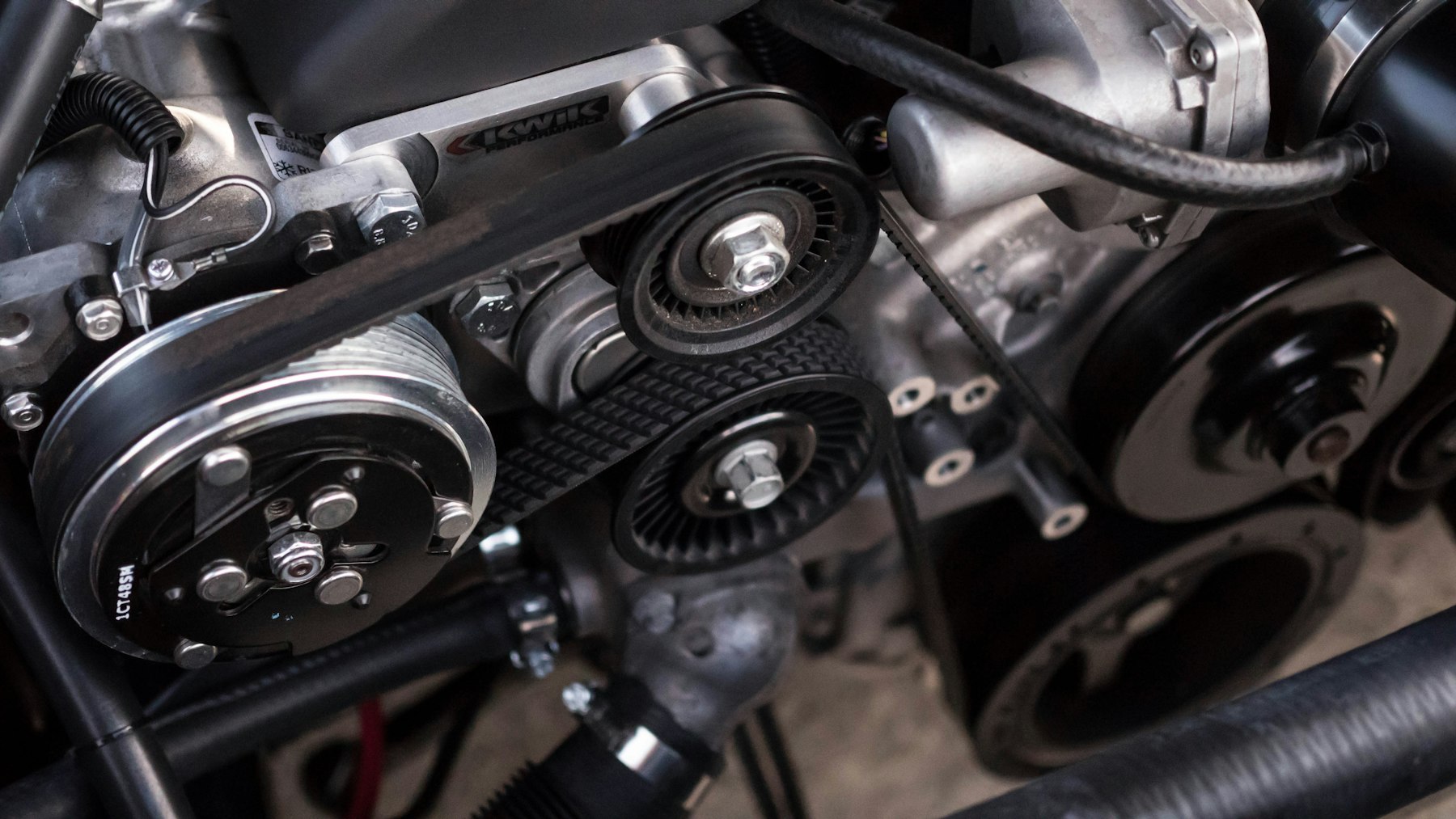
Service density and parts lead time shape “reliability” for owners more than badge folklore. Stock photo — not a Toyota or Chinese EV product shot. Photo: Unsplash.
Specs that matter vs specs that market
Marketing on both sides weaponizes feelings.
What Chinese EV marketing (abroad) sells
- Aggressive list prices in Europe/Asia
- Dense feature lists (screens, ADAS packages, “smart” cabins)
- Strong acceleration on mid-tier batteries
- WLTP range headlines that travel well on social media
What Toyota EV marketing (US) sells
- Brand trust earned mostly on hybrids and ICE durability narratives
- Dealer proximity and warranty process familiarity
- Safety and quality language that feels “adult” to US suburban buyers
- EPA-oriented figures on US pages you can re-check live
What US ownership actually taxes
Reliability, for a private owner, is not a slogan. It is a stack:
| Layer | What it means in practice |
|---|---|
| Hardware durability | Will the drive unit, battery, and suspension survive your miles? |
| Software stability | Do OTA updates fix or break ADAS / charging / HVAC? |
| Service access | Can a trained tech see you in days, not months? |
| Parts logistics | Crash panels and 12V/HV components with known ETAs |
| Data visibility | Recalls, TSBs, owner forums, used-market comps in the US |
| Exit liquidity | Can the next buyer finance and insure it easily? |
Chinese compact EVs can score well on overseas instrumented reviews for ride or features. That does not automatically produce US layers 3–5. Toyota bZ4X may score unevenly on early US owner sentiment for range or software — while still winning on layers 3–5 because it is a normal retail product.
FairRange will not invent head-to-head dyno winners. We do not have a fake 100,000-mile Chinese EV vs bZ4X — US fleet study to cite. What we can do is separate perception, available US data, and policy friction.
Perception vs data availability
| Claim you hear | What US evidence usually looks like in 2026 |
|---|---|
| “Chinese EVs are unreliable” | Often anecdote + geopolitics; thin US private fleet data for non-retail models |
| “Toyota EVs are reliable like Camrys” | Hybrid heritage helps brand trust; EV-specific US long-term data is still maturing |
| “Chinese is always cheaper” | Overseas stickers ≠ US landed cost under Section 301 + compliance |
| “bZ4X range is disappointing” | Often a product/EPA vs expectation issue — not an origin morality tale |
When bZ4X owners complain about highway range or charging behavior, that anxiety is frequently about EV execution and expectations, not about whether the badge is Chinese. Treating every EV complaint as a China-vs-Toyota culture war makes worse purchase decisions.

Insurance quotes, warranty paperwork, and service scripts beat slogan debates. Photo: Unsplash.
A practical comparison lens
Use Toyota’s US bZ4X pages as the live source for trims and EPA-oriented marketing. For Chinese compact EVs, treat overseas reviews as product context only.
| Factor | Lean bZ4X (US control) if— | “Chinese compact EV interest” is rational if— |
|---|---|---|
| Purchase this quarter | You need a titled, insurable car now | You are researching future entry or non-US relocation |
| Reliability evidence | You want US dealer process + recall visibility | You accept thin US private data and policy uncertainty |
| Service | You can stress-test local Toyota rooftops this week | You are not depending on a private US brand network yet |
| Cost | You model OTD + insurance with US quotes | You are not pasting European MSRP into a US sheet |
| Anxiety type | Your worry is range/software on a known brand | Your worry is geopolitics and you want primary policy docs |
US service network reality
Toyota bZ4X
Toyota’s US dealer network is uneven on EV enthusiasm — some rooftops are excellent; some still think in oil-change cadence — but the network is real. A shopper can:
- find dealers via Toyota.com / bZ4X tools
- ask for EV-trained techs and loaner policy
- get body-shop referrals that already touch Toyota EV panels
That does not guarantee a perfect ownership experience. It does mean “reliability” has an operational address: appointment latency, parts warehouse behavior, and warranty adjudication you can observe.
Homework: call two Toyota dealers with the same script (“bZ4X HV warning light diagnostic — next available appointment?”). Write down dates. That is more predictive of your life than a forum war about brand origin.
Chinese compact passenger EVs (US private view)
As of 30 Aug 2026, these vehicles are generally not in authorized US retail for private buyers. Without a franchise map, “reliability” collapses into:
- independent shops willing to touch an unfamiliar platform
- importer relationships (if any)
- parts lead times measured in hope
USA Today and Electrek reporting on BYD’s Canada-facing expansion and US tariff friction illustrate a North American story that is policy-first, not “just sell the hatch already.” Canadian dealer scouting does not create a US private service appointment in Ohio.
Connected-vehicle rules from Commerce/BIS and related Federal Register text add another service-adjacent risk: features, telematics, and supply-chain compliance can matter as much as a physical wrench. Shoppers cannot “fix” that with a better tire brand.
Resale and policy risk
This is where the “Chinese cheap” story usually dies for US buyers.
USTR’s September 2024 Section 301 modifications determination is a primary reference for how China-origin EV duties were structured in the mid-2020s. Large Section 301 layers commonly discussed for China-origin EVs can wipe overseas price advantages before you add freight, Registered Importer costs, or state registration friction. Re-read the primary PDF; do not trust a random tariff meme.
NHTSA importing guidance and CBP process remain the operational gate for any non-conforming vehicle narrative. If a seller cannot show conformity and a written insurer bind, the “cheap” car is expensive in risk terms.
When Toyota anxiety is not about China
Be honest about the bZ4X control:
- If your fear is real-world highway range vs brochure, that is an EV physics and thermal-management conversation. Compare EPA estimates, your cruise speed, and climate — then test-drive and log miles. Origin is secondary.
- If your fear is early software / ADAS quirks, that is an industry-wide EV software maturity conversation. Demand demo drives and check open recalls/TSBs.
- If your fear is resale after incentives shift, that is a used-EV market conversation. bZ4X at least has a US used path forming; non-retail Chinese compacts do not.
Reliability anxiety that is really “I don’t trust batteries” will not be cured by buying a Chinese EV abroad on Instagram. Reliability anxiety that is really “I need a dealer within 30 miles” points strongly at US-certified inventory such as bZ4X or peers.

Section 301 and import conformity often erase “cheap overseas” before ownership even starts. Photo: Unsplash.
Hold-period scenarios
| Plan | Lower friction path | Higher friction path |
|---|---|---|
| 2–3 year US commute | US-certified EV (bZ4X or peers) with dealer service | Non-retail Chinese compact / gray import |
| 6–10 year hold | Still prefer certified + known parts; watch battery health | Only if you accept illiquidity and policy drift |
| “I might move to Canada/EU” | Revisit foreign retail rules then — not US DMV assumptions | Do not pre-buy US gray inventory on that hope |
Verdict
| Your situation | FairRange take |
|---|---|
| Need a US compact/crossover EV now | Use bZ4X (and other US-certified options) as the actionable shortlist; Chinese compact EVs are generally research-only |
| Anxiety is “Toyota good / China bad” | Split the feeling: service + data availability vs product reviews abroad |
| Anxiety is bZ4X range/software | Treat as EV product evaluation — compare EPA, test-drive, dealer support — not geopolitics |
| Tempted by overseas “cheap Chinese” stickers | Price Section 301, BIS connected-vehicle rules, NHTSA/CBP conformity, and insurance first |
| Watching Canada BYD news | Useful North America context; not a US title |
Bottom line: Chinese compact EV products can look strong in markets where they actually retail. Toyota bZ4X purchasability and service observability win for most US private buyers in 2026. “Reliability” without US data, dealers, and exit liquidity is a story you are telling yourself — not a spreadsheet.
Re-check Toyota’s live bZ4X pages and primary USTR/BIS/NHTSA/CBP documents before money moves. This is research synthesis, not a durability test report.
Sources
- Toyota — bZ4X: https://www.toyota.com/bz4x/
- USTR — Section 301 Modifications Determination (Sept 12, 2024) PDF: https://ustr.gov/sites/default/files/Section%20301%20Modifications%20Determination%20FRN%20%28Sept%2012%202024%29%20%28FINAL%29.pdf
- BIS — connected vehicle supply chain rule press release: https://www.bis.gov/press-release/commerce-finalizes-rule-secure-connected-vehicle-supply-chains-foreign-adversary-threats
- Federal Register (GovInfo): https://www.govinfo.gov/content/pkg/FR-2025-01-16/html/2025-00592.htm
- NHTSA — Importing a vehicle: https://www.nhtsa.gov/importing-vehicle
- CBP: https://www.cbp.gov/
- USA Today — BYD expansion / Canada & US tariff context: https://www.usatoday.com/story/cars/news/2026/01/28/byd-ev-expansion-trump-imports/88393986007/
- Electrek — BYD Canada dealership plans: https://electrek.co/2026/03/24/byd-plans-20-canadian-dealerships-toronto-first/
Editorial opinion for research only. Not financial, legal, insurance, or purchase advice.
FAQ
Are Chinese compact EVs sold new through authorized US retail in 2026?
Generally no for private passenger models as of 30 Aug 2026. Toyota bZ4X remains a US retail product with brand pages, dealers, and insurance quotes you can collect this week.
Does “Toyota reliability” automatically beat overseas Chinese EV reviews?
Not automatically. Toyota’s reputation is decades of ICE/hybrid data and US dealer density. Chinese EV product quality overseas can be competitive — but US shoppers lack long US fleet data, authorized service maps, and thick used comps for cars that never retailed here.
When is bZ4X anxiety about software/range rather than brand origin?
When owners complain about real-world highway range, charging behavior, or early software quirks on a US-certified Toyota EV — those are product-execution issues shared by many EVs, not a “China vs Japan” morality play.
Editorial opinion for research only. Not financial, legal, or purchase advice. Last verified 2026-08-30.